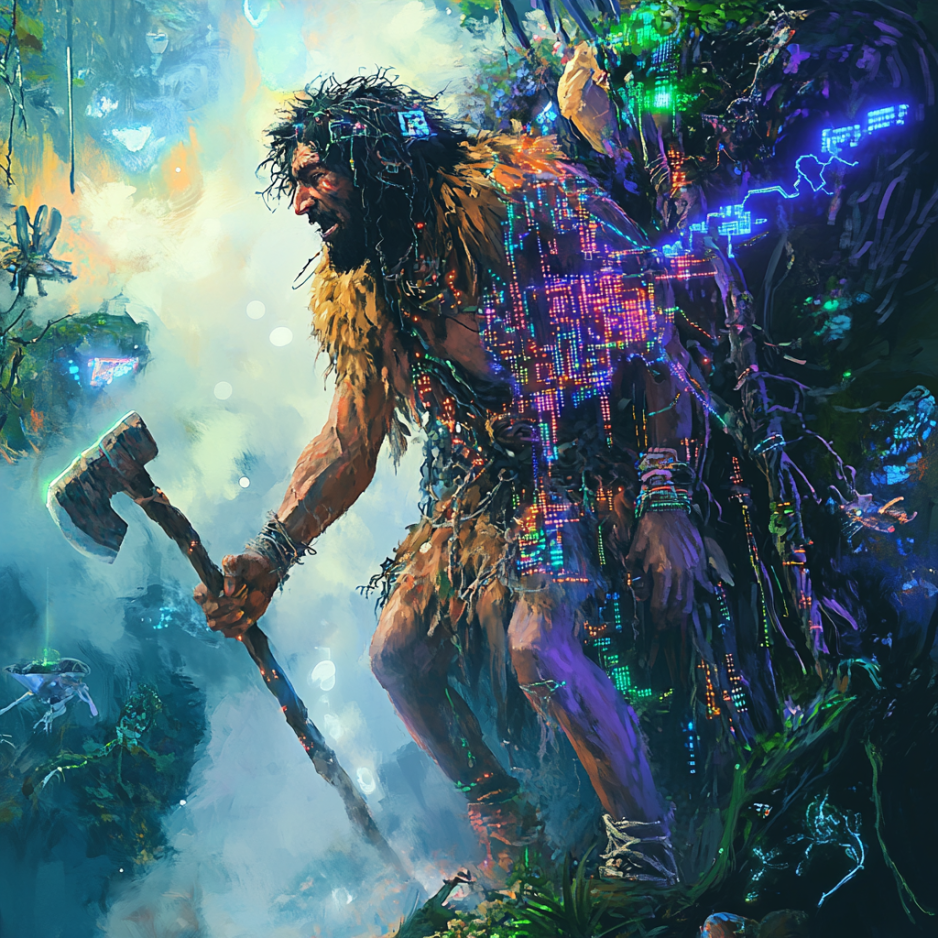
Imagine for a moment that you’re a time traveler. You’ve been plucked from the African savannah 100,000 years ago and dropped into the heart of New York City. The towering skyscrapers, the cacophony of traffic, the endless stream of information from smartphones — it would all be overwhelming, alien, perhaps even terrifying.
Now, here’s the kicker: in a very real sense, this is exactly what’s happened to all of us.
Our bodies and minds, honed by millions of years of evolution to thrive in a world of scarcity, danger, and small tribal groups, now find themselves in a landscape of abundance, relative safety, and global connectivity. This, gentlemen, is what scientists call an “evolutionary mismatch,” and it’s at the heart of many challenges facing the modern man.
As someone who’s spent years exploring the intersection of ancient wisdom and modern challenges, I’ve seen firsthand how this mismatch plays out in our lives. From the stress we feel checking our emails to the loneliness we experience despite having hundreds of social media connections, many of our daily struggles can be traced back to this fundamental disconnect between our Stone Age brains and our Digital Age realities.
But here’s the good news: understanding this mismatch is the first step to overcoming it. In this article, we’ll dive deep into how our evolutionary heritage shapes our behaviour, explore the specific challenges it creates in our modern world, and most importantly, discover practical strategies to leverage our ancient instincts for success in the 21st century.
So, fellow modern men, are you ready to bridge the gap between your primal instincts and your digital life? Let’s embark on this journey of self-discovery and adaptation together.
Our Stone Age Brain: The Ancestral Operating System
Picture this: You’re scrolling through your social media feed, and suddenly you see a post from an old friend bragging about their new promotion. A pang of jealousy hits you. Or maybe you’re at the grocery store, and despite your best intentions, you find yourself drawn to the sugary snacks aisle. These moments, seemingly mundane, are your Stone Age brain in action.
You see, gentlemen, we’re walking around with what is essentially an ancestral operating system — a brain optimised for a world that no longer exists. Let’s break down some key components of this ancient software:
1. The Tribal Mind:
Our brains are wired for small, tight-knit communities of about 150 individuals (known as Dunbar’s number). This made perfect sense when our survival depended on close cooperation within our tribe. But in a world where we interact with thousands of people, both in-person and online, this tribal instinct can lead to us feeling overwhelmed or isolated.
2. The Scarcity Subroutine:
For most of human history, calories were scarce and unpredictable. Our brains evolved to crave high-calorie foods and eat them whenever available. This was great for surviving famines. Not so great when you’re trying to resist that late-night pizza order.
3. The Status Seeker:
In our ancestral environment, status meant better access to resources and mates. This drive is still with us, manifesting in our constant comparisons on social media or our desire for the latest gadgets.
4. The Threat Detector:
Our brains have a negativity bias, always on the lookout for potential dangers. This kept us alive on the savannah but can lead to chronic stress and anxiety in our relatively safe modern world.
5. The Immediate Gratification Module:
In an environment where the future was uncertain, it made sense to prioritise immediate rewards. Today, this can make it challenging to save for retirement or stick to long-term goals.
Now, I want you to pause for a moment and reflect. How have you seen these ancient instincts play out in your own life? Maybe you’ve felt the pull of tribal thinking in political discussions, or perhaps you’ve struggled with the scarcity mindset around food or money.
Understanding these instincts isn’t about labelling them as “good” or “bad.” It’s about recognising them for what they are — deeply ingrained patterns that served our ancestors well but may need some tweaking in our modern context.
In the next section, we’ll explore how these Stone Age instincts collide with our Digital Age realities, creating the evolutionary mismatches that challenge us as modern men. But remember, with awareness comes power. By understanding our ancestral operating system, we take the first step towards upgrading it for the modern world.

The Digital Age Reality: When Stone Age Meets Silicon Valley
Imagine dropping a caveman into a Tesla factory. That’s essentially what we’re dealing with when our Stone Age brains encounter the realities of our digital world. The mismatch is profound, and it’s affecting us in ways we’re only beginning to understand.
Let’s break down some of the key areas where this mismatch plays out:
1. Information Overload:
Our ancestors dealt with a limited amount of novel information daily. Today, we’re bombarded with the equivalent of 174 newspapers’ worth of data every single day. Our brains, designed to pay attention to every new stimulus (because it could be a predator or a food source), are overwhelmed. This leads to stress, reduced attention spans, and decision fatigue.
Personal Challenge: When was the last time you sat in silence, without reaching for your phone? If the thought makes you uncomfortable, you’re not alone.
2. Social Media and Relationships:
Remember that tribal mind we talked about? It’s not equipped to handle hundreds or thousands of “friends” on social media. We’re trying to apply Stone Age social skills to Digital Age connections, often leading to feelings of inadequacy, FOMO (fear of missing out), and paradoxically, increased loneliness.
Real Talk: Have you ever felt worse after scrolling through Instagram? That’s your ancestral brain struggling to contextualise all those carefully curated snippets of others’ lives.
3. Physical Inactivity:
Our bodies are built for movement — running, climbing, lifting. Yet many of us spend our days hunched over keyboards, leading to a host of physical and mental health issues.
Action Point: Stand up right now and do five push-ups. Feels good, doesn’t it? That’s your body thanking you for giving it what it’s designed for.
4. Artificial Light and Sleep Patterns:
The invention of artificial light has extended our days far beyond what our circadian rhythms expect. The blue light from our devices tricks our brains into thinking it’s always daytime, disrupting our sleep patterns and overall health.
Quick Tip: Try setting a “digital sunset” an hour before bed. Your Stone Age brain will thank you.
5. Abundance and Overconsumption:
We’re surrounded by more food, entertainment, and consumer goods than our ancestors could have imagined. Our brains, wired for scarcity, often lead us to over-consume, resulting in health issues and environmental problems.
Food for Thought: Next time you’re about to make an impulse purchase, ask yourself: “Would my great-great-grandfather consider this essential?”
6. Chronic Stress:
Our stress response, designed for short-term physical threats, is constantly triggered by non-physical, ongoing stressors like deadlines, traffic, and financial worries. This leads to a host of health problems and can even shrink our brains over time.
Stress Test: Notice your body right now. Are your shoulders tense? Jaw clenched? These could be signs of chronic stress you’re not even aware of.
As modern men, we’re at the forefront of this evolutionary mismatch. We’re the ones grappling with these new realities, trying to reconcile our ancient instincts with the demands of the digital world.
But here’s the thing, gents: awareness is the first step to adaptation. By understanding these mismatches, we can start to develop strategies to bridge the gap between our Stone Age brains and our Digital Age lives.
In the next section, we’ll explore how these mismatches specifically impact modern masculinity, and most importantly, what we can do about it. Stay with me — the best is yet to come.
The Impact on Modern Masculinity: Redefining Strength in a Digital World
Gentlemen, let’s talk about what it means to be a man in this mismatched world of ours. Our evolutionary instincts shaped traditional notions of masculinity — the provider, the protector, the stoic leader. But in our digital age, these concepts are being challenged and redefined.
1. The Provider Paradox:
Our instinct to provide was straightforward in a hunter-gatherer society. Today, providing often means excelling in a knowledge economy that our Stone Age brains weren’t designed for. This mismatch can lead to stress, imposter syndrome, and a crisis of identity.
Real Talk: Have you ever felt that despite your achievements, you’re somehow not measuring up? That’s your ancestral brain grappling with modern metrics of success.
2. The Protection Predicament:
Our instinct to protect our “tribe” is still strong, but the threats we face are often intangible — cybersecurity, financial instability, or social media influences on our loved ones. This can leave us feeling powerless or constantly on edge.
Action Step: Redefine protection for the modern age. It might mean setting up strong passwords, teaching digital literacy, or creating emotional safe spaces for your loved ones.
3. The Emotional Evolution:
Traditional masculinity often emphasised stoicism, but our complex modern world requires high emotional intelligence. We’re challenged to be vulnerable, empathetic, and expressive — skills our ancestors didn’t necessarily prioritise for male survival.
Challenge: Practice expressing one emotion you usually keep hidden. It’s not weakness; it’s evolving strength.
4. The Competition Conundrum:
Our competitive instincts, once crucial for survival and mating, can be counterproductive in a world that increasingly values collaboration. Yet, social media and career pressures often amplify our comparative and competitive tendencies.
Mindset Shift: Start seeing other men as potential allies rather than competitors. There’s strength in unity.
5. The Purpose Problem:
In tribal societies, a man’s role and purpose were often clear-cut. Today, with countless career paths and lifestyle choices, many men struggle with finding meaning and direction.
Deep Dive: Ask yourself, what would give you a sense of purpose if societal expectations didn’t exist? That’s your starting point for authentic living.
6. The Adaptability Advantage:
Here’s the silver lining, gents. While these mismatches present challenges, they also offer opportunities. The modern man who can adapt — who can bridge his instincts with current realities — has an evolutionary advantage.
Your Superpower: Flexibility is the new strength. The ability to adapt your instincts to modern challenges is what will set you apart.
Remember, we’re not looking to eradicate our evolutionary heritage. It’s part of what makes us who we are. Instead, we’re aiming to understand it, to harness its strengths, and to consciously evolve where necessary.
In our next section, we’ll dive into practical strategies for reconciling our Stone Age instincts with our Digital Age lives. We’ll explore how to leverage our evolutionary strengths while developing new skills for the modern world.
Stay with me, gentlemen. We’re not just surviving this mismatch — we’re going to thrive in it.
Strategies for Reconciliation: Bridging the Gap Between Instinct and Innovation
Alright, gentlemen, this is where the rubber meets the road. We’ve identified the mismatch, we’ve seen its impact, and now it’s time to do something about it. Here are concrete strategies to help you reconcile your Stone Age instincts with your Digital Age reality:
1. Mindful Technology Use:
Our brains aren’t wired for constant connectivity. Implement digital boundaries to give your ancestral mind some breathing room.
Action Step: Try a ‘Tech Shabbat’ — a 24-hour period each week free from screens. Use this time to connect with nature, engage in face-to-face interactions, or pursue analog hobbies.
2. Physical Engagement:
Your body is built for movement. Don’t let the sedentary nature of modern life override this fundamental need.
Challenge: Incorporate primal movements into your fitness routine. Think squats, deadlifts, sprints, and climbing. Your Stone Age body will thank you.
3. Tribal Connection in a Global World:
Leverage technology to foster genuine connections, not just surface-level interactions.
Strategy: Create a ‘digital tribe’ of no more than 150 people (remember Dunbar’s number?) across your social platforms. Engage deeply with this group rather than superficially with thousands.
4. Mindfulness and Stress Management:
Your stress response isn’t designed for chronic activation. Learn to dial it down.
Practice: Try box breathing — inhale for 4 counts, hold for 4, exhale for 4, hold for 4. Repeat for 5 minutes daily. It’s a simple way to signal ‘safety’ to your ancestral brain.
5. Purposeful Consumption:
In a world of abundance, practice intentional scarcity.
Exercise: Implement a ‘hunter-gatherer day’ once a month. Eat only what you could conceivably hunt or gather, and engage only in essential activities. It’s a powerful reset for your abundance-overwhelmed brain.
6. Emotional Intelligence Training:
Actively work on skills our ancestors didn’t prioritise but are crucial today.
Daily Practice: At the end of each day, write down three emotions you experienced and reflect on why you felt them. This simple act can dramatically increase your emotional awareness over time.
7. Ancestral Eating in a Modern World:
Align your diet more closely with what your genes expect.
Nutrition Hack: Follow the ‘perimeter rule’ in grocery stores — shop mainly the outer aisles where whole foods are typically located. Your Stone Age digestive system will appreciate it.
8. Cultivate Real-World Skills:
Balance your digital proficiencies with tangible, ancestral skills.
Weekend Project: Learn a hands-on skill like woodworking, gardening, or basic survival techniques. It’s not just practical; it satisfies a deep, ancestral need to create and provide.
9. Harness Competitive Instincts Productively:
Channel your competitive drive into personal growth rather than social comparison.
Mindset Shift: Compete with yourself. Keep a journal of your progress in various areas of life, always striving to outdo your previous benchmarks.
10. Conscious Evolution:
Actively shape your own adaptation to the modern world.
Reflection Exercise: Regularly ask yourself, “Is this reaction coming from my ancestral brain or my rational mind?” This awareness allows you to choose your responses more consciously.
Remember, gents, this isn’t about rejecting modernity or trying to live like our ancestors. It’s about finding a balance — leveraging the incredible opportunities of our Digital Age while honouring the fundamental needs of our Stone Age brains.
Implementing these strategies won’t happen overnight. Start small, be consistent, and most importantly, be patient with yourself. You’re navigating a mismatch millions of years in the making — it’s okay if it takes some time to find your balance.
In our final section, we’ll look towards the future and explore what it means to be a modern man fully embracing both his ancestral heritage and his role in shaping the world to come.

The Future of Man: Evolving Beyond Our Programming
Gentlemen, we’ve journeyed together from the African savannah to the digital landscape of the 21st century. We’ve explored the mismatches between our ancestral programming and our modern realities. Now, let’s look to the horizon and consider what comes next.
The modern man stands at a unique crossroads in human history. We have the self-awareness to recognise our evolutionary heritage, the intelligence to understand its implications, and the tools to consciously shape our future. This is not just adaptation; this is evolution in real-time.
Consider this:
1. Conscious Evolution:
Unlike our ancestors, we have the power to intentionally direct our evolution. Not through changing our DNA, but by consciously choosing which instincts to embrace, which to modify, and which to transcend.
2. Technological Integration:
The future may see a more seamless integration of technology with our biological selves. The challenge will be to use these advancements to enhance our humanity, not replace it.
3. Redefining Masculinity:
As we continue to navigate the mismatch between our instincts and our environment, we have the opportunity to redefine what it means to be a man. Strength, provision, and protection take on new meanings in a digital world.
4. Global Tribe:
Our tribal instincts, once limited to small groups, have the potential to expand to encompass all of humanity. The modern man can be a bridge-builder, using our innate sense of loyalty and cooperation on a global scale.
5. Balancing Act:
The future belongs to those who can balance their primal instincts with modern realities. It’s not about suppressing our ancestral selves, but about channeling that raw power into constructive, forward-thinking action.
Your Call to Action:
1. Embrace Self-Awareness: Make it a daily practice to question your reactions. Are they serving you in the modern world, or are they outdated responses?
2. Cultivate Adaptability: The most valuable skill in an ever-changing world is the ability to adapt. Push yourself out of your comfort zone regularly.
3. Lead by Example: Share your journey of reconciling Stone Age instincts with Digital Age realities. Your experience could be the guidebook someone else needs.
4. Invest in Your Evolution: Dedicate time and resources to your personal growth. Your ancestors survived through physical evolution; your task is to thrive through mental and emotional evolution.
5. Shape the Future: Engage in discussions about the future of technology, society, and what it means to be human. Your voice, informed by both ancestral wisdom and modern insight, is crucial in these conversations.
Remember, you are not just a product of your evolutionary past. You are a conscious agent in the ongoing story of human development. The mismatch between our Stone Age brains and our Digital Age lives is not a problem to be solved, but an opportunity to be seized.
You, the modern man, have the unique privilege of standing with one foot in our ancestral past and one in our technological future. Embrace this position. Use the strengths gifted to you by evolution, temper them with the wisdom of self-awareness, and forge a path that honours both where we’ve come from and where we’re going.
The future is not something that happens to us. It’s something we create. So, gentlemen, let’s create a future that brings out the best of our primal selves while reaching for the stars of our potential.
Are you ready to evolve?
Mercy, Love, and Grace.
Faithfully yours,
Jack.
 The Modern Man
Leave a comment