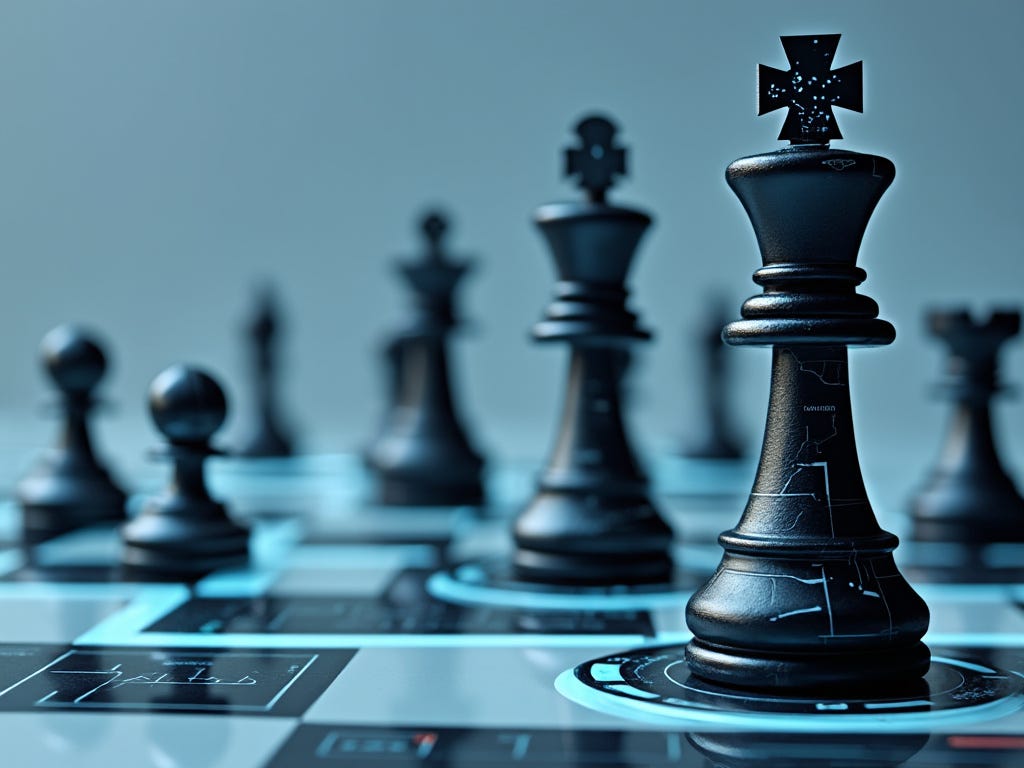
Imagine waking up to find you’re a key player in a global chess match, one where the board stretches beyond borders, the pieces move in ways you never anticipated, and the rules seem to shift with each passing day. This isn’t the plot of a new spy thriller — it’s the reality of our world today, as illuminated by David Kilcullen’s groundbreaking work, “The Dragons and the Snakes: How the Rest Learned to Fight the West.”
As modern men navigating an increasingly complex world, we often focus on our immediate surroundings — our careers, our relationships, our local communities. But Kilcullen’s insights reveal that we’re all unwitting participants in a new kind of global conflict, one that blurs the lines between war and peace, state and non-state actors, and traditional and emerging power structures.
In this article, we’ll dive deep into Kilcullen’s analysis, exploring how the lessons of the old Cold War have evolved into a new, more intricate dance of global power. We’ll uncover how “Dragons” — state actors like China and Russia — and “Snakes” — non-state players like terrorist groups and transnational criminal organisations — have adapted to challenge Western dominance in ways that affect our daily lives, often without us even realising it.
From the technology we use every day to the economic decisions made in distant capitals, from the information we consume to the very nature of truth and reality — all are now potential battlegrounds in this new era of conflict. As we unravel these hidden dynamics, we’ll not only gain a clearer picture of the world we inhabit but also understand how we, as individuals, can navigate and even influence this global chess game.
So, grab a seat at the table, gentlemen. It’s time to see the board for what it is and understand the game you’ve been playing all along. Welcome to the new age of global conflict — hidden in plain sight, shaping our world in ways we’re only beginning to understand.
The Evolution of Adversaries: Dragons and Snakes
In the decades since the fall of the Berlin Wall, the world has transformed in ways that even the most prescient Cold War strategists could scarcely have imagined. As Kilcullen astutely observes, our adversaries haven’t been sleeping — they’ve been learning, adapting, and evolving. The “Dragons” — state actors like China and Russia — have studied the West’s playbook carefully. They’ve observed our strengths in conventional warfare and our vulnerabilities to asymmetric tactics. Instead of trying to match us tank for tank or carrier for carrier, they’ve developed strategies to exploit our weaknesses and neutralise our advantages.
Take China’s approach in the South China Sea. Rather than risk open conflict, they’ve employed a “salami-slicing” strategy — making small, incremental moves that, while provocative, fall short of justifying a military response. It’s as if they’re slowly moving their pawns across the board, one square at a time, reshaping the region’s geopolitical landscape without ever formally declaring their intentions.
Russia, on the other hand, has mastered the art of “hybrid warfare.” From Ukraine to Syria, and even in Western democracies, they’ve blended conventional military tactics with cyber operations, disinformation campaigns, and economic manipulation. It’s a strategy that keeps adversaries off-balance, never quite sure if they’re at war or peace.
But it’s not just the Dragons we need to worry about. The “Snakes” — non-state actors like terrorist groups and transnational criminal organisations — have proven remarkably adept at exploiting the gaps in the international system. They operate across borders, leverage technology, and adapt quickly to counter-terrorism efforts.
Consider how groups like ISIS have used social media not just for propaganda, but for recruitment, training, and even operational planning. They’ve turned our own technological innovations against us, using the connectivity of the modern world to spread their influence far beyond traditional geographic boundaries.
What’s particularly striking about Kilcullen’s analysis is how these Dragons and Snakes have learned from each other. State actors have adopted the decentralised, network-centric approaches of terrorist groups, while non-state actors have developed capabilities once reserved for nation-states.
This evolution presents a complex challenge for the West. Our military, diplomatic, and economic institutions, built for a world of clear boundaries and defined state actors, are struggling to adapt to this new reality. As modern men, we need to understand that the geopolitical landscape is no longer a simple chessboard with clearly defined pieces. It’s a complex, multidimensional game where the players and the rules are constantly changing.
In the next section, we’ll explore how technology has become both a weapon and a battlefield in this new era of conflict, and what it means for our daily lives.

Technological Warfare: The New Frontlines
In this new global chess game, technology isn’t just changing the way we live and work — it’s fundamentally altering the nature of conflict itself. As Kilcullen points out, the battlefields of the 21st century are often invisible, fought in cyberspace and the information sphere.
Consider the smartphone in your pocket. It’s not just a communication device; it’s potentially a vector for cyberattacks, a tool for spreading disinformation, and a treasure trove of personal data that can be weaponised. The same technology that connects us to the world also makes us vulnerable in ways we’re only beginning to understand.
Cyber warfare has emerged as a great equaliser. Nations that could never hope to challenge Western military might on a conventional battlefield can now potentially cripple critical infrastructure, disrupt financial systems, or interfere in democratic processes with nothing more than skilled hackers and an internet connection. The 2020 SolarWinds hack, attributed to Russia, demonstrated how even the most secure government and corporate networks can be compromised.
But it’s not just about hacking and cybersecurity. The information space itself has become a battlefield. Social media platforms, designed to connect people and share information, have become powerful tools for spreading propaganda and manipulating public opinion. As Kilcullen notes, both state and non-state actors have become adept at exploiting these platforms to sow discord, inflame tensions, and shape narratives.
The rise of artificial intelligence and machine learning adds another layer of complexity. From autonomous weapons systems to AI-powered disinformation campaigns, these technologies are reshaping the contours of modern conflict. They offer the potential for lightning-fast decision-making and unprecedented analytical capabilities, but also raise profound ethical questions about the nature of warfare and the role of human judgment.
Perhaps most unsettling is the emergence of “deep fakes” and other AI-generated content. As these technologies improve, distinguishing truth from fiction becomes increasingly challenging. In a world where seeing is no longer believing, how do we maintain trust in our institutions and in each other?
For the modern man, understanding these technological dimensions of conflict is crucial. It’s not just about staying informed or protecting our personal data — though those are certainly important. It’s about recognising that we are all, in a sense, on the front lines of this new form of warfare. Every time we share information online, every app we download, every digital footprint we leave — all of these actions have potential geopolitical implications.
As we navigate this digital minefield, we must cultivate a new kind of literacy — one that combines technological savvy with critical thinking and a healthy dose of skepticism. We need to be aware of the ways our information ecosystem can be manipulated and be proactive in seeking out diverse, reliable sources of information.
In the next section, we’ll explore how these technological changes have contributed to a blurring of the lines between war and peace, creating a new state of constant, low-level conflict that Kilcullen calls “liminal warfare.”
The Blurring of War and Peace: Welcome to Liminal Warfare
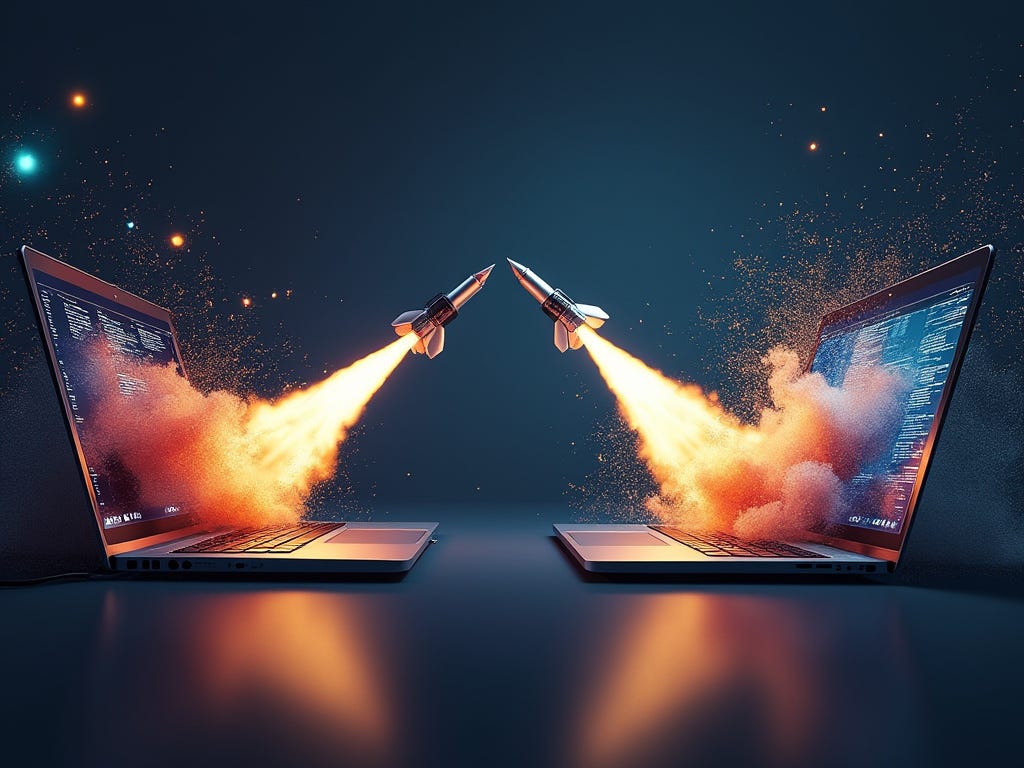
One of Kilcullen’s most profound insights is the concept of “liminal warfare” — a state of conflict that exists in the grey area between war and peace. This isn’t the clear-cut, declared warfare of the past. Instead, it’s a constant, simmering tension where the lines between combatant and civilian, battlefield and home front, are increasingly blurred.
Think about it: When was the last time you felt truly at peace? Sure, we’re not dodging bullets or hiding in bomb shelters, but we’re constantly bombarded with news of global tensions, cyber threats, and economic warfare. This persistent state of unease is a hallmark of liminal warfare.
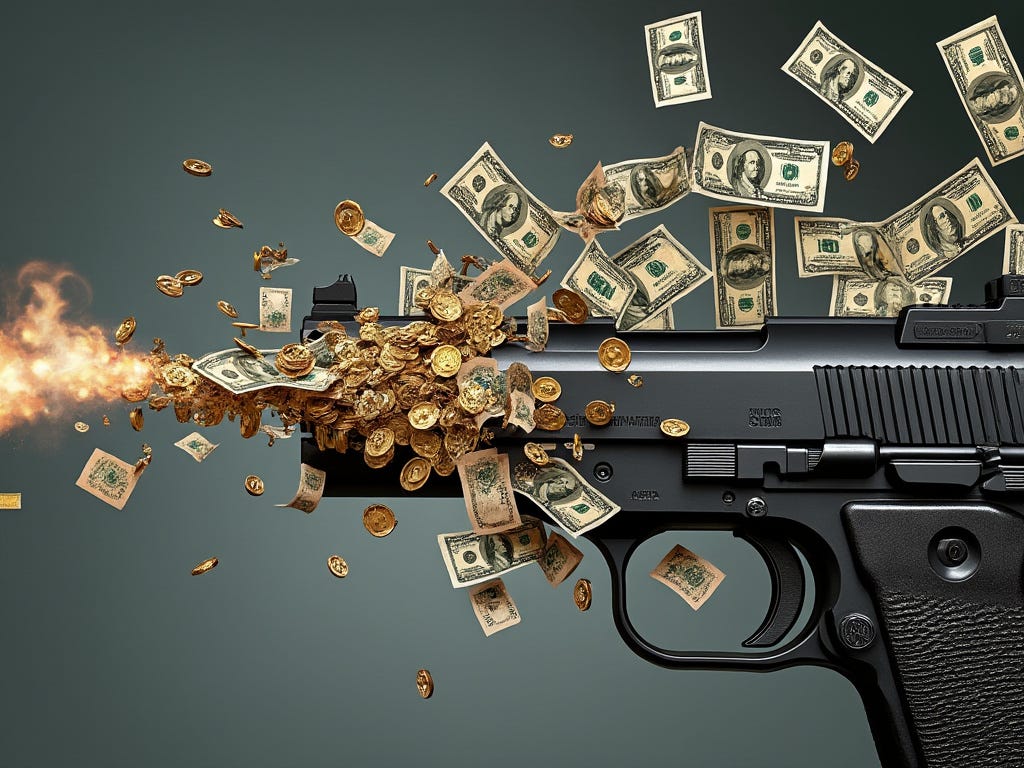
In this new paradigm, actions that fall short of traditional definitions of war can still have profound impacts. Economic sanctions, for instance, can cripple a nation’s economy without a single shot being fired. Information operations can sway elections and undermine social cohesion without any physical violence. Cyber attacks can disrupt critical infrastructure from thousands of miles away.
Kilcullen points out that our adversaries, both state and non-state, have become adept at operating in this liminal space. They push boundaries and exploit ambiguities in international law, always staying just below the threshold that would trigger a conventional military response.
Russia’s actions in Ukraine provide a prime example. The use of “little green men” — soldiers without official insignia — in Crimea created a fog of uncertainty that paralysed the international community’s response. Was it an invasion? An internal conflict? By the time the world figured it out, the annexation was a fait accompli.
China’s actions in the South China Sea offer another illustration. Through a combination of artificial island-building, maritime militia operations, and strategic ambiguity about its intentions, China has effectively changed the status quo without ever crossing into open warfare.
For us as individuals, this blurring of war and peace has profound implications. We may not be soldiers, but we are all, in a sense, on the front lines of this new form of conflict. Our data, our opinions, our economic choices — all can be weaponised in liminal warfare.
Moreover, this constant state of not-quite-war creates psychological strain. It’s harder to feel secure, to plan for the future, when the ground seems to be constantly shifting beneath our feet. As modern men, we need to cultivate resilience and adaptability to thrive in this uncertain environment.
But it’s not all doom and gloom. Understanding the nature of liminal warfare also empowers us. By recognising these tactics, we can better resist manipulation and make more informed decisions. We can pressure our leaders to develop new strategies and international norms better suited to this new reality.
In the next section, we’ll explore how economic tactics have become a key battleground in this new era of conflict, and how they affect our daily lives in ways we might not even realise.

Economic Battlegrounds: The New Frontiers of Power
In this evolving landscape of global conflict, economic tactics have become weapons as potent as any missile or tank. As Kilcullen astutely observes, the financial world is now a key theatre of operations in the new cold war, with far-reaching consequences for nations and individuals alike.
Consider the power of sanctions. With the stroke of a pen, nations can be cut off from global financial systems, their economies crippled without a single shot fired. The U.S. sanctions against Iran or the international sanctions against North Korea are prime examples. These economic measures can be more devastating than traditional military operations, affecting not just governments but the daily lives of ordinary citizens.
But it’s not just about sanctions. We’re witnessing a new form of economic warfare that’s more subtle and pervasive. China’s Belt and Road Initiative, for instance, isn’t just an infrastructure project — it’s a tool for expanding geopolitical influence. By creating economic dependencies, China is reshaping the global order in ways that traditional military power simply cannot match.
Similarly, the race for technological dominance — in areas like 5G networks, artificial intelligence, and quantum computing — is as much about economic supremacy as it is about military advantage. The ongoing tensions between the U.S. and China over companies like Huawei illustrate how economic and national security concerns have become inextricably linked.
Even cryptocurrency, once hailed as a tool for financial freedom, has become a battlefield. Nations under sanctions, like North Korea, have turned to crypto as a way to evade international financial restrictions. Meanwhile, China’s development of a digital yuan could potentially challenge the dollar’s global dominance, reshaping the international financial system.
For us as individuals, this economic dimension of conflict has very real implications. The jobs we have, the products we can buy, the value of our savings — all can be affected by these global economic manoeuvres. A trade war between superpowers can impact the price of your next smartphone or the cost of your groceries.
Moreover, our personal financial data has become a valuable resource in this new form of warfare. The massive data breaches we often hear about aren’t just criminal activities; they can be acts of economic espionage, with state actors seeking to gain financial and strategic advantages.
As modern men navigating this complex economic battlefield, we need to be more financially literate than ever. Understanding global economic trends, diversifying our investments, and being aware of the geopolitical implications of our financial choices are no longer optional — they’re essential skills for thriving in this new world order.
But there’s also an opportunity here. By understanding these economic dynamics, we can make more informed decisions about where we work, what we buy, and how we invest. We can support companies and initiatives that align with our values and contribute to global stability rather than conflict.
In the next section, we’ll explore the evolving role of non-state actors in this global chess game, and how they’re reshaping the very nature of power and conflict in the 21st century.
The Rise of Non-State Actors: New Players on the Global Chessboard
In Kilcullen’s analysis, one of the most significant shifts in the global landscape is the rising influence of non-state actors — Kilcullen’s “snakes.” These entities, ranging from terrorist organisations to multinational corporations, from NGOs to decentralised movements, are reshaping the nature of power and conflict in ways that challenge traditional notions of state sovereignty and international relations.
Consider, for a moment, the power wielded by tech giants like Google, Facebook, or Amazon. These companies have user bases larger than the populations of most countries, control vast amounts of data, and have the ability to shape public opinion on a global scale. Their decisions about content moderation or data privacy can have geopolitical ramifications that rival those of many nation-states.
Similarly, terrorist organisations like ISIS have demonstrated an ability to operate across borders, leveraging social media and encrypted communications to recruit, plan, and execute operations on a global scale. They’ve shown a remarkable ability to adapt to counter-terrorism efforts, often outpacing the bureaucratic responses of traditional state actors.
Even seemingly benign entities like NGOs can play significant roles in shaping global affairs. Organisations focused on issues like climate change or human rights can influence international policy and public opinion in ways that challenge state narratives and priorities.
Kilcullen points out that these non-state actors often operate in the gaps and seams of the international system, exploiting legal and operational grey areas that state actors struggle to address. They’re nimble, adaptive, and often unbound by the same rules and norms that constrain traditional powers.
For us as modern men, understanding the role of these non-state actors is crucial. They impact our lives in myriad ways, from the information we consume to the products we use, from the causes we support to the threats we face. Recognising their influence allows us to make more informed decisions and navigate this complex landscape more effectively.
Moreover, the rise of these non-state actors presents both challenges and opportunities. On one hand, it adds layers of complexity to global issues, making traditional diplomatic and military solutions less effective. On the other hand, it opens up new avenues for individuals to engage with and influence global affairs.
For instance, our choices as consumers can support or undermine corporate policies that have global impacts. Our engagement with social movements can shape international discourse on key issues. Even our digital footprints — the information we share, the networks we engage with — can influence global dynamics in ways that were unimaginable just a few decades ago.
As we navigate this new reality, we need to cultivate a broader awareness of these non-state actors and their roles in the global chess game. We need to critically evaluate the information we receive, understanding that it may be shaped by interests beyond traditional state propaganda. And we need to recognise our own potential to act as non-state influencers, using our voices and choices to shape the world around us.
In the next section, we’ll explore how the West can adapt its strategies to this new global reality, and what it means for us as individuals navigating this complex landscape.
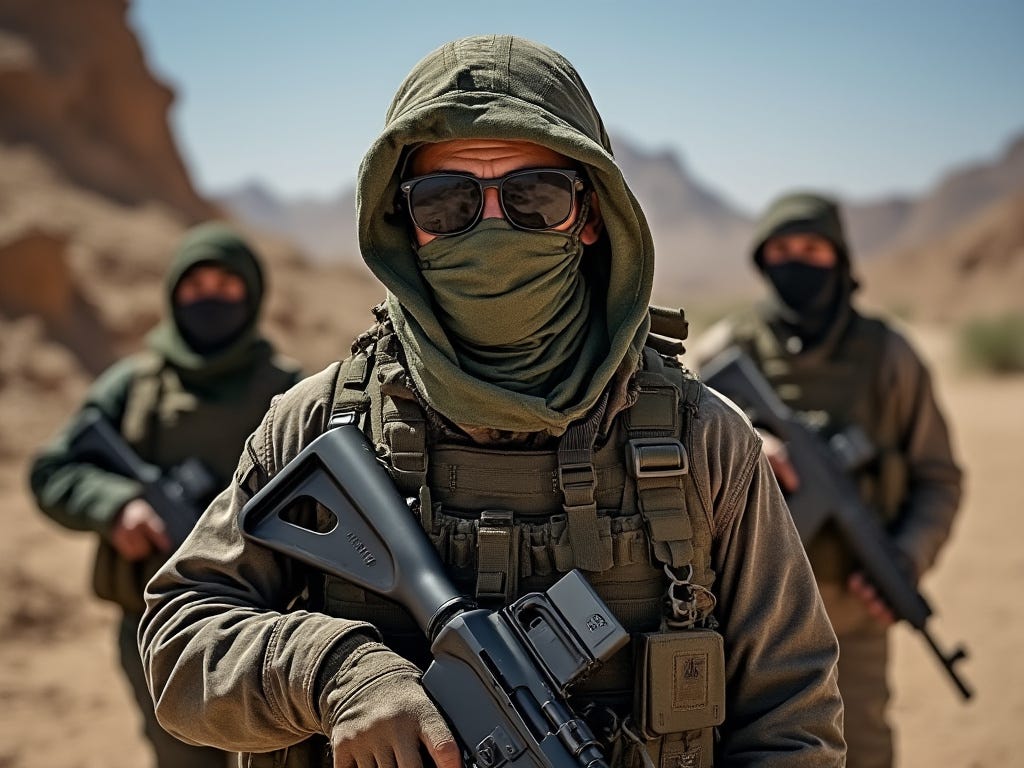
Adapting Western Strategy: A New Playbook for a Changed World
As Kilcullen argues, the West’s traditional approaches to global conflict are increasingly outdated in this new landscape. The strategies that served us well during the Cold War and in its immediate aftermath are no longer sufficient to address the complex, multifaceted challenges we face today.
So, how do we adapt? Kilcullen offers several key insights that are not only relevant for policymakers but also for us as informed citizens navigating this new world order.
First and foremost, we need to embrace adaptability. The rigid, doctrine-based approaches of the past are too slow and inflexible for the rapidly changing nature of modern conflict. Instead, we need to cultivate what Kilcullen calls a “capacity for adaptation” — the ability to quickly recognise new threats and opportunities and adjust our strategies accordingly.
This adaptability needs to extend to our institutions as well. Our military, diplomatic, and intelligence agencies need to become more agile, breaking down silos and fostering collaboration to address the interconnected nature of modern threats.
Secondly, Kilcullen emphasises the importance of understanding local contexts. The one-size-fits-all approach to global challenges is no longer viable. Whether we’re dealing with counterinsurgency in the Middle East or economic competition with China, success depends on a nuanced understanding of local cultures, histories, and motivations.
For us as individuals, this means broadening our perspectives. We need to seek out diverse sources of information, engage with different cultures, and challenge our own assumptions about the world. It’s not just about being well-informed; it’s about developing the kind of cultural intelligence that allows us to navigate an increasingly interconnected global landscape.
Another key aspect of Kilcullen’s recommended strategy is the need to compete in the “grey zone” — that ambiguous space between war and peace where much of modern conflict takes place. This means developing capabilities for influence operations, cyber warfare, and economic statecraft that can counter our adversaries’ tactics without escalating to full-scale war.
As citizens, we play a role in this too. By being aware of disinformation campaigns, practicing good cybersecurity habits, and making informed economic choices, we can contribute to our nation’s resilience in these grey zone conflicts.
Kilcullen also stresses the importance of building and maintaining alliances. In a world where power is increasingly diffuse, the ability to form flexible coalitions around shared interests is crucial. This applies not just to state-level diplomacy, but to our personal and professional lives as well. Networking, collaboration, and bridge-building are essential skills in this new global context.
Finally, Kilcullen argues for a renewed focus on domestic resilience. The lines between foreign and domestic policy are blurring, and our ability to withstand external pressures depends largely on the strength of our societies. This means addressing internal divisions, strengthening our democratic institutions, and building a shared sense of purpose.
For us as modern men, this translates to active citizenship. It’s about engaging in our communities, participating in the democratic process, and working to bridge divides in our own spheres of influence.
In the next section, we’ll explore how these new dynamics compare to the original Cold War, and what lessons we can draw from that era for our current challenges.

Parallels and Differences with the Original Cold War
As we navigate this new global chess game, it’s natural to draw comparisons with the Cold War of the 20th century. While there are certainly parallels, Kilcullen’s analysis reveals crucial differences that we must understand to effectively address today’s challenges.
Like the Cold War, we’re once again in a period of great power competition. The U.S. and its allies find themselves facing off against strategic competitors, primarily China and Russia. There’s a familiar ideological component too — liberal democracy versus authoritarian models of governance. However, the similarities largely end there.
Unlike the bipolar world of the Cold War, today’s landscape is far more complex. We’re not dealing with two monolithic blocs, but a multitude of state and non-state actors with overlapping and sometimes contradictory interests. China and Russia, while often aligned in opposition to the West, are not a unified force like the former Soviet bloc.
The nature of the conflict itself is fundamentally different. The Cold War was characterised by its potential to turn “hot” at any moment, with the threat of nuclear annihilation looming large. Today’s conflicts are more nuanced, often playing out in the economic, technological, and information realms rather than through direct military confrontation.
Another key difference is the level of global interconnectedness. During the Cold War, the world was clearly divided into separate economic and political spheres. Today, our adversaries are often our trading partners. China, for instance, is both America’s biggest strategic competitor and one of its largest trading partners. This economic interdependence creates a complex web of incentives and constraints that didn’t exist in the previous era.
The role of ideology has also shifted. While there are certainly ideological components to today’s conflicts, they’re not as clear-cut as the capitalism versus communism divide of the Cold War. Today’s battles are often fought over competing visions of world order, economic models, and spheres of influence rather than stark ideological differences.
Technology, too, plays a vastly different role. While technological competition was a key feature of the Cold War (think of the space race), today’s technological landscape is far more complex and fast-moving. The rapid pace of innovation in areas like artificial intelligence, biotechnology, and cyber capabilities creates new frontiers of competition and potential conflict almost daily.
Perhaps most significantly, the clear rules and norms that governed much of the Cold War — concepts like mutually assured destruction and spheres of influence — are less relevant or have broken down entirely. The “rules of the game” in today’s global competition are far less clear, leading to greater unpredictability and potential for miscalculation.
For us as modern men, understanding these differences is crucial. The strategies and mindsets that worked during the Cold War won’t necessarily serve us well in today’s environment. We need to be more flexible in our thinking, more nuanced in our understanding of global dynamics, and more adaptable in our approaches to challenges.
In our final section, we’ll look at what all this means for the future of global conflict and our role in shaping that future.

The Future of Global Conflict: Our Role in Shaping the New World Order
As we’ve journeyed through Kilcullen’s insights and examined the complex chessboard of modern global conflict, one thing becomes clear: the future is far from certain, but our role in shaping it is more crucial than ever.
The new cold war, with its blend of state and non-state actors, its technological battlegrounds, and its blurred lines between war and peace, presents challenges unlike anything we’ve faced before. But with these challenges come opportunities — opportunities for those who are informed, adaptable, and engaged.
As modern men, we find ourselves in a unique position. We’re not just spectators in this global game; we’re participants, whether we realise it or not. Our digital footprints, our consumer choices, our political engagement — all of these play a part in the larger geopolitical landscape.
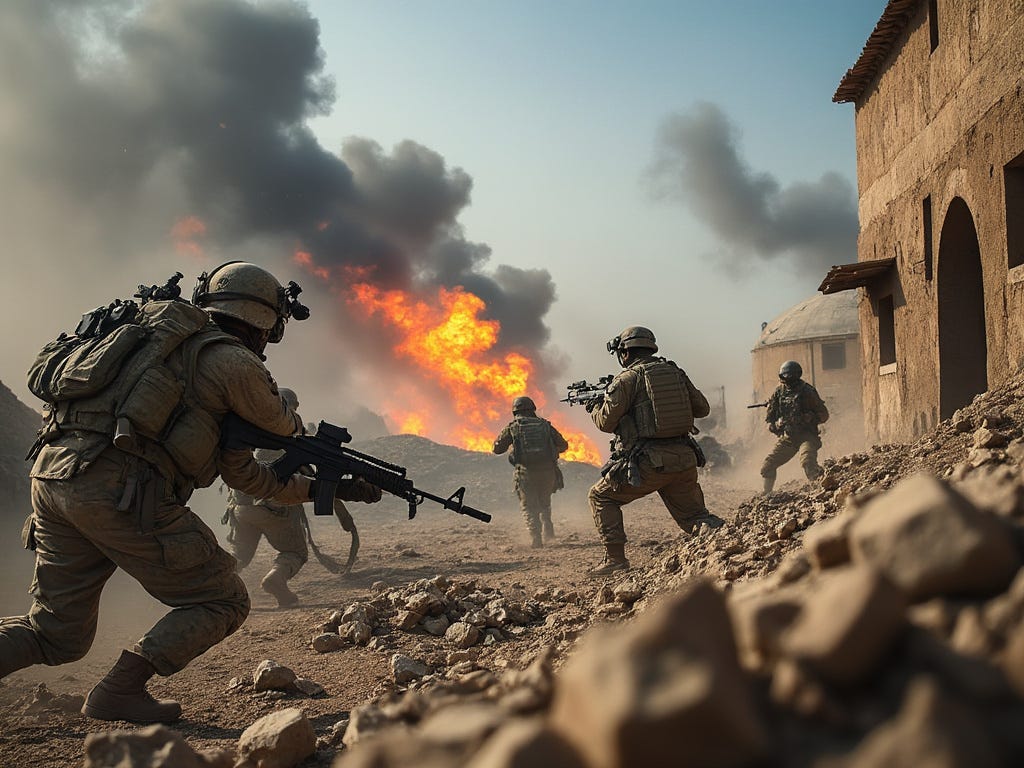
So, what does this mean for us moving forward?
First, it means staying informed. Not just by passively consuming news, but by actively seeking out diverse perspectives, questioning narratives, and developing a nuanced understanding of global dynamics. It means cultivating the kind of media literacy that allows us to navigate the complex information landscape of the 21st century.
Second, it means being adaptable. The rigid ideologies and fixed strategies of the past won’t serve us in this new era. We need to be flexible in our thinking, ready to reassess our views in light of new information, and capable of thriving in an environment of constant change.
Third, it means engaging. Whether it’s in our local communities, our professional networks, or the digital realm, we have the power to influence the course of events. By being active citizens, ethical consumers, and thoughtful digital denizens, we can contribute to building the kind of resilient, adaptable societies that can navigate the challenges ahead.
Finally, it means maintaining perspective. While the challenges we face are real and significant, they’re not insurmountable. Throughout history, humanity has faced periods of profound change and uncertainty — and we’ve adapted, innovated, and ultimately thrived.
As we look to the future, let’s approach it not with fear, but with a sense of purpose and possibility. Let’s see ourselves not as pawns in this global chess game, but as players — informed, engaged, and ready to shape the world we want to see.
The new cold war may be upon us, but the outcome isn’t predetermined. Through our collective actions, our informed choices, and our commitment to building a better future, we have the power to influence the course of history.
So, gentlemen, as we navigate this complex new world, let’s do so with wisdom, courage, and a sense of shared purpose. The game is afoot — and we’re all players now.
Mercy, Love and Grace,
Faithfully yours
jack
 The Modern Man
Leave a comment