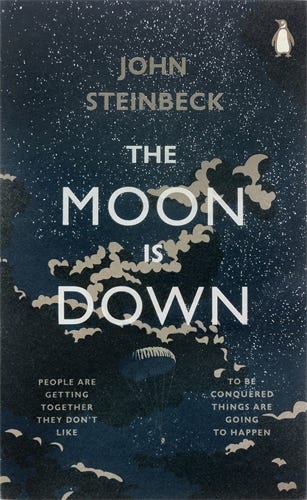
In the annals of World War II, tales of heroic resistance fighters, covert operations, and decisive battles often take centre stage. Yet, one of the most powerful weapons wielded against Nazi occupation came not from the barrel of a gun, but from the pen of an American novelist. John Steinbeck’s “The Moon is Down,” a seemingly simple tale of occupation and resistance, became an unexpected beacon of hope for those living under the shadow of fascism.
As modern men, we often underestimate the power of words and ideas in shaping history. This hidden chapter of World War II reminds us that courage and resistance can be inspired in the most unexpected ways, and that the pen can indeed be mightier than the sword.
The Birth of “The Moon is Down”:
In 1942, as the world reeled from the expanding tide of Nazi conquest, the United States government approached John Steinbeck, already a celebrated author for works like “The Grapes of Wrath.” Their request was unusual: write a piece of propaganda that could inspire resistance in occupied countries. Steinbeck, cognisant of the power and responsibility of his craft, accepted the challenge.
The result was “The Moon is Down,” a novella that told the story of a small town occupied by an unnamed invading force. The book portrayed the occupiers not as cartoonish villains, but as human beings caught in the machinery of war. More importantly, it showed the quiet strength of ordinary people standing up to oppression, a theme that would resonate deeply with its intended audience.
Steinbeck’s approach was subtle yet powerful. He avoided mentioning specific countries or using obvious propaganda techniques. Instead, he focused on universal themes of freedom, dignity, and the indomitable human spirit. This approach would prove crucial in the book’s ability to slip past Nazi censors and reach the hands of those who needed its message most.

Spreading Hope Through Literature:
The distribution of “The Moon is Down” in occupied Europe was a feat of wartime ingenuity. The Office of Strategic Services (OSS), predecessor to the CIA, worked with resistance networks to smuggle copies of the book across borders and behind enemy lines. The novella was translated into Dutch, French, Norwegian, Danish, German, Italian, and Russian, among other languages.
In Norway, miniature copies of the book were hidden in waterproof containers and dropped by Allied planes. In Denmark, it was disguised as a prayer book. French Resistance members risked their lives to print and distribute copies. The Nazi regime, recognising the threat posed by Steinbeck’s words, made possession of the book a capital offence in occupied territories.
Despite the dangers, “The Moon is Down” spread like wildfire through underground networks. It was read aloud in secret gatherings, passed from hand to hand, and became a symbol of hope and resistance. The book’s impact was so significant that after the war, Steinbeck was awarded the Norwegian King’s Medal for his contribution to the Norwegian resistance movement.
Impact on Resistance Movements:
The impact of “The Moon is Down” on various resistance movements across Europe was profound and far-reaching. In Norway, where the book resonated particularly strongly, resistance fighters drew inspiration from the novella’s depiction of ordinary citizens standing up to occupation. The book’s portrayal of the Norwegian-like town’s quiet but determined resistance mirrored their own struggles and bolstered their resolve.
In France, where the resistance movement was fragmented and often demoralised, Steinbeck’s work provided a unifying narrative. It offered a vision of resistance that was not just about grand acts of sabotage or espionage, but about the everyday courage of ordinary people. This resonated deeply with French citizens who may have felt powerless against the Nazi war machine.
The Danish resistance, known for its successful efforts to save Jewish citizens, found in the book a reflection of their own quiet heroism. The novella’s emphasis on the power of collective action and the importance of maintaining one’s humanity in the face of brutality aligned perfectly with the Danish approach to resistance.
Even in Germany itself, where possession of the book carried severe penalties, some copies managed to circulate among dissidents. It offered a perspective on the occupation that many Germans had not considered, potentially influencing those who were growing disillusioned with the Nazi regime.

The Power of Fiction in Wartime:
“The Moon is Down” demonstrated the unique power of fiction to inspire and motivate in ways that factual accounts or overt propaganda often cannot. By creating relatable characters and situations, Steinbeck allowed readers to see themselves in the story, to imagine their own potential for resistance and courage.
The book’s focus on the psychological aspects of occupation and resistance was particularly impactful. It portrayed the occupiers as human beings susceptible to fear and doubt, which demystified the enemy and made resistance seem more achievable. At the same time, it showed how small acts of defiance could accumulate to create significant problems for the occupying force.
Moreover, the novella provided a shared narrative and language for resistance fighters across different countries. It created a sense of solidarity among occupied peoples, reinforcing the idea that they were part of a larger struggle against tyranny.
Nazi Reaction:
The Nazi regime’s reaction to “The Moon is Down” was swift and severe, indicating their recognition of the book’s potential to undermine their control. In occupied territories, possession of the novella was made a capital offence. Nazi propaganda ministers denounced the book as Jewish-inspired lies meant to weaken German resolve.
Despite these efforts, or perhaps because of them, the book’s popularity only grew. The harsh reaction of the Nazi regime inadvertently confirmed the book’s power, making it even more sought after among resistance members and ordinary citizens alike.
Legacy of “The Moon is Down”:
The impact of Steinbeck’s novella extended far beyond the war years. In the post-war period, many resistance fighters and ordinary citizens came forward to share how the book had influenced them during the occupation. Steinbeck was honoured by several European countries for his contribution to the resistance effort.
In Norway, where the book had perhaps its greatest impact, Steinbeck was awarded the King’s Medal of Freedom in 1946. This honour underscored the significant role that literature had played in maintaining morale and inspiring resistance during the dark years of occupation.
Steinbeck himself reflected on the novella’s impact in his later years. He considered “The Moon is Down” to be one of his most important works, not for its literary merit, but for its real-world impact. The experience of writing the book and learning of its effect on resistance movements deeply influenced his views on the responsibility of writers in times of crisis.
Modern Parallels:
The story of “The Moon is Down” remains relevant in our modern world. It serves as a powerful reminder of the enduring impact of literature and ideas in shaping human events. In an age of digital communication and instant news, we might be tempted to underestimate the power of a single book. Yet, even today, we see examples of how stories can inspire resistance and hope in the face of oppression.
From samizdat literature in the Soviet Union to banned books in authoritarian regimes today, the written word continues to be a potent force for change. The legacy of Steinbeck’s wartime novella challenges us to consider the role of art and literature in our own times of crisis and conflict.
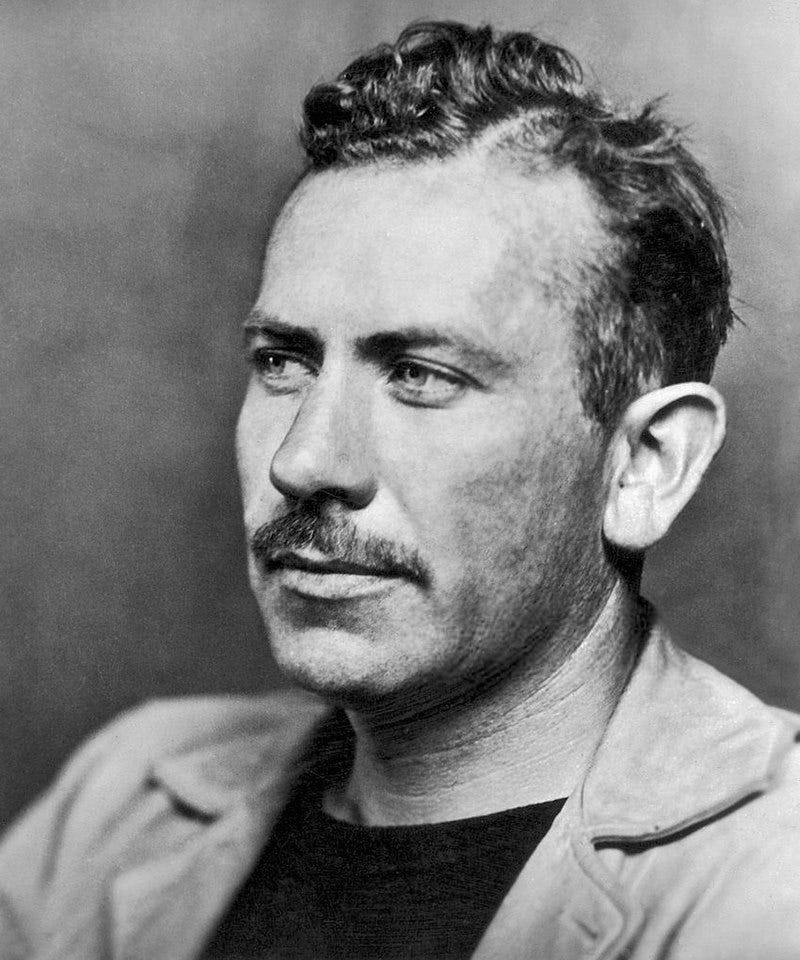
The hidden history of “The Moon is Down” offers several profound lessons for the modern man. First, it reminds us of the power of ideas and the written word. In a world often dominated by brute force and loud voices, Steinbeck’s quiet tale of resistance had a thunderous impact.
Secondly, it highlights the responsibility that comes with the ability to influence others. Steinbeck used his talents not for personal gain, but in service of a greater cause. As men of influence in our own spheres, we too bear the responsibility to use our skills and platforms for the greater good.
Finally, this story underscores the importance of hope and solidarity in the face of seemingly insurmountable odds. The readers of “The Moon is Down” found in its pages not just entertainment, but a reflection of their own potential for courage and resistance.
As we face our own challenges in the modern world, may we remember the lesson of Steinbeck’s wartime novella. Whether we wield a pen, a keyboard, or any other tool of influence, we have the power to inspire change and kindle hope. In doing so, we write our own chapters in the ongoing story of human resilience and dignity.
Reflection:
How do you use your talents and influence to make a positive impact in your community or the world at large? Are there modern examples of literature or art inspiring real-world change that resonate with you? Share your thoughts and experiences in the comments below.
Mercy, Love, and Grace.
Faithfully yours,
Jack.
 The Modern Man
Leave a comment